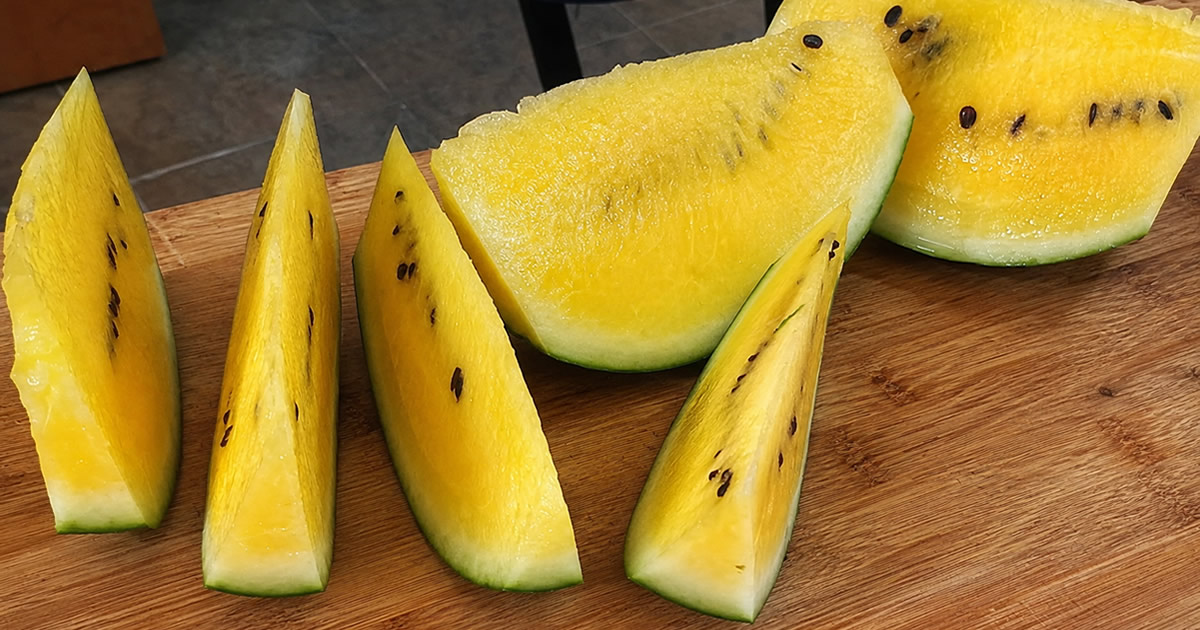
When you think of watermelon, the classic fresh and sweet red slice immediately comes to mind. Yet there is a less common but increasingly popular variety: the yellow watermelon.
From the outside, it looks almost identical to the traditional one, with its green, striped rind. The surprise comes when it is cut open: the flesh, instead of being red, is an intense and highly inviting yellow.
Besides being beautiful to look at, it is also rich in water, light, and perfect for summer.
Why does yellow watermelon have this color?
The yellow color depends on the presence of different pigments compared to those in red watermelon. Specifically, it contains beta-carotene, a substance that the body can convert into vitamin A.
For this reason, yellow watermelon can contribute to the well-being of the skin, vision, and mucous membranes, especially when included in a varied and balanced diet.
It is not a miracle food, but it is a simple and tasty way to bring more color and nutrients to your table.
A highly hydrating fruit
One of its main benefits is its high water content. This makes it ideal on hot days when the body needs to replenish fluids.
Eating it as a snack can help you feel fresher and lighter, especially when chosen instead of pastries, packaged snacks, or sugary drinks.
It is perfect for mid-morning, in the afternoon, or after a walk under the sun.
Light and low in fat
Yellow watermelon is naturally low in fat and has a low calorie content. This makes it suitable for anyone who wants to eat something sweet without feeling weighed down.
Its natural sweetness can satisfy a craving for something fresh and good, but it should still be consumed in moderation, especially by those who need to manage their blood sugar levels.
Contains vitamin C and antioxidant substances