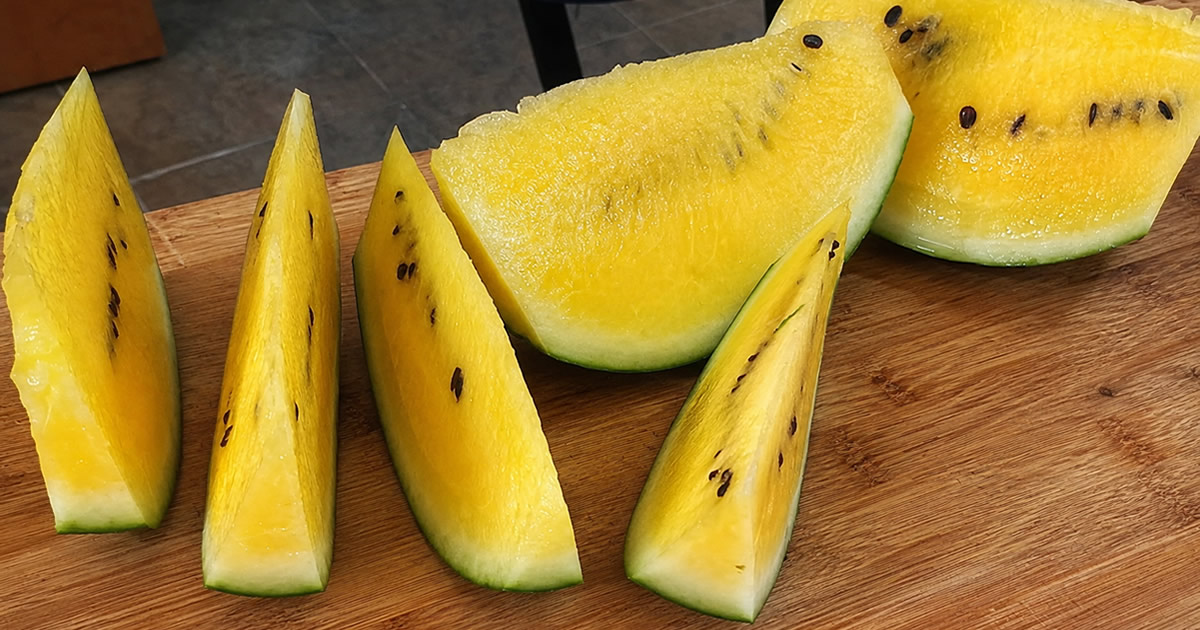
Yellow watermelon contains vitamin C and antioxidant substances, which are useful for helping the body protect cells from oxidative stress.
Alternating fruits of different colors is a good habit, because each color brings along different nutrients. The yellow watermelon, with its sunny flesh, is an interesting choice to vary your summer fruits.
Can help replenish minerals
With heat and sweating, the body loses water and mineral salts. Yellow watermelon contains potassium, an important mineral for fluid balance and normal muscle function.
It does not replace water or any medical advice, but it can contribute naturally to daily well-being.
What does yellow watermelon taste like?
The flavor is sweet, delicate, and slightly tropical. Some describe it as a mix between watermelon, pineapple, mango, and prickly pear.
The texture is juicy and crisp, while the taste is often more unique compared to that of red watermelon.
How to eat it
The simplest way is to enjoy it cold, cut into slices or cubes. However, it can also be used in fresh and creative recipes.
It works well in summer salads with cucumbers, feta, mint, or arugula, as well as in fruit salads, smoothies, homemade granitas, or fruit skewers.
A quick idea? Cubes of yellow watermelon, a few mint leaves, and a few drops of lemon juice.
Where to find it
Yellow watermelon is less common than the red one, but in recent years it has become easier to find, especially during the summer months.
Its season roughly runs from June to August. It can be found at local markets, well-stocked fruit shops, and sometimes also in large supermarkets.
Yellow watermelon is an original, fresh, and light summer fruit. It catches your eye with its color, surprises you with its flavor, and can offer health benefits thanks to its content of water, vitamin C, beta-carotene, and potassium.